Bring a claim✦Free admission✦Open to all✦Mon., Jan. 25 · 6 PM✦Ruth Culver Community Library✦Watch it get taken apart, live✦No sign-up needed✦
Bring a claim✦Free admission✦Open to all✦Mon., Jan. 25 · 6 PM✦Ruth Culver Community Library✦Watch it get taken apart, live✦No sign-up needed✦
Vol. I · Special Edition · Prairie du Sac, WisconsinMonday, January 25, 2027
Special EditionVeritasTruth Through Transparency
Free · Open to All
Don'tGetPlayed
Bring a claim you've seen online. Watch it get taken apart, live. A free one-hour workshop on spotting misinformation before it spots you.
Mon., Jan. 25, 20276:00 PMRuth Culver Community Library
The Workshop
Your feed is full of claims. Here's how to take one apart.
Every day, posts, headlines and forwarded videos deliver information to you that asks you to believe something, feel something, or share something. Some of that is true. Some is half true. But, increasingly, much of it is built to push your buttons. In this one hour event, you'll see how to tell the difference, using real claims (see below what that means) from participants in the room.
Nobody needs to be an expert, and nobody gets put on the spot, but everybody will leave with a short checklist you can use the next time something makes your jaw drop.
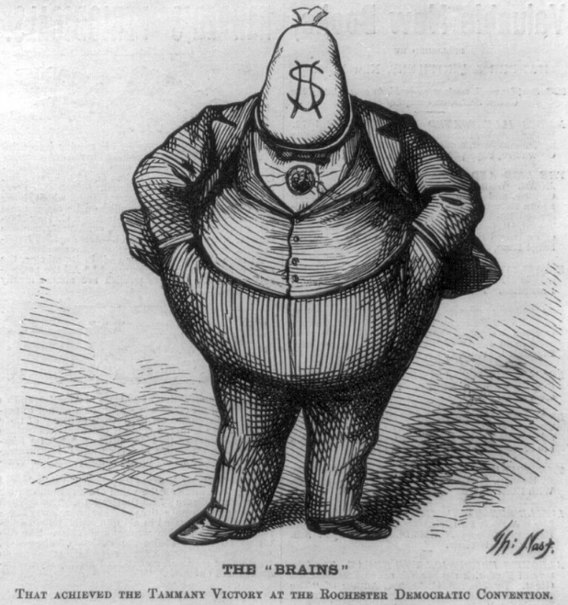
The "Brains." Nast drew Boss Tweed with a money bag for a head. When a claim pushes your buttons, ask who gains. Thomas Nast, Harper's Weekly, Oct. 21, 1871. Library of Congress, public domain.
Bring a Claim
Bring the thing(s) that made you think "wait a minute, is that true?" or "I read/heard that [fill in the blank with whatever]"
A Social Media post
A headline
A meme
A video clip
A forwarded email
Something a relative or friend said
A screenshot on your phone is easiest. A printout or a scrap of paper works too, and so does just telling us what you heard. Any political or educational viewpoint, any topic. We'll pick a few and break them down together on the big screen.
IMPORTANT! Your name never goes on screen, and nothing you bring gets posted anywhere.
How It Works
How a claim gets broken down
We'll use the VERITAS toolkit to show how to analyze information to identify how it conveys objective and subjective meaning:
Check it against verified records. Then look at what happens when the information meets what's actually been found. We'll see how all information lands as Grounded, Contested, or Conflicts With Evidence, or actually "We just don't know yet" as a REAL answer.
Weigh what the information stands on. We'll discuss how forty headlines can be one source told forty times. We look for independent sources, the original document, and whether the person saying it gains from it.
We'll discuss what it looks like when you read past the headline. Asking questions like "Does the story actually back up what the headline says? Does it earn the feeling it's asking you to have?"
When you learn to present information plainly and strip out the drama, you can see what's left standing. If the point disappears once the drama goes away, the drama was doing the work.
Bottom line - learn how to make the information show its receipts. Tell the difference between what was searched and what was found, so you can check the work yourself.
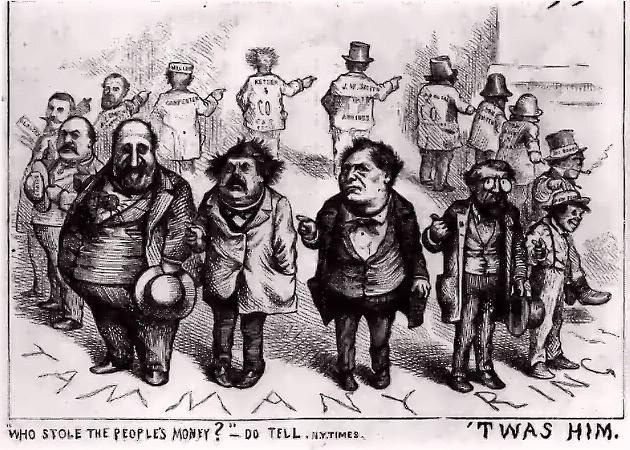
"Who stole the people's money?" "'Twas him." Every man in the ring points at the next one. Forty voices can still be one source. Thomas Nast, Harper's Weekly, Aug. 19, 1871. Public domain.
Proof Sheet · Worked Example
"Coffee prevents heart disease in adults over 50."
Against the recordContested
What it stands onModerate
The headlineAssumptions present
Big studies show a link, but diet, income and exercise muddy it, and "prevents" claims a cause the research never showed.
Who It's For
Anyone who's ever wondered "Can I trust this?"
And how to decide what needs to happen in order to trust it.
Grandparents fielding forwarded emails. Parents watching what their kids scroll. Teens who already know more than they let on. People who are tired of arguing at Thanksgiving. If you've ever shared something and wished you hadn't, this hour is for you.
Questions
Before you come
Does it cost anything?
No. It's free and open to the public.
Do I need to sign up?
No. Just come. If you're bringing a group, a heads-up helps us save seats.
Do I need a phone or laptop?
No. A screenshot helps, but a printout or your memory works fine. Everything happens on the big screen.
Is it OK to bring my kids?
Yes, please do. All ages are welcome, and younger kids will get the most out of it with a grown-up beside them.
What's in it for me?
A short checklist you can use on anything that lands in your feed, and a few better questions to ask before you believe it or pass it on.
How does VERITAS keep the lights on?
Every claim VERITAS checks runs on Anthropic's Claude AI models, and every check has a real cost. A first read runs on Haiku, a fast, low-cost model. If you ask it to go deeper, the full analysis, a stress test of that analysis and an independent second opinion run on Sonnet, a more thorough model. Harder claims take more searching and reasoning, so they cost more to check. Tonight is free, and we'll share how you can support the project if you find it useful.
Will my claim be shown on screen?
Only if you want it to be, and never with your name on it. We'll pick claims at random, so not every one will make it on screen. If yours doesn't, stay after and we'll try it together.
If we have to move the date, this page will say so first. We're also looking into whether we can record the session or stream it live.
Take It Home
Clip and save
Screenshot this before you go. It fits on a phone screen.
Before you share
Who said it first, and how would they know?
Is it one source told forty times?
Does the story back up the headline?
What does it want me to feel, and is that feeling earned?
Said plainly, is there still a point?
Would I believe it if it helped the other side?
Your Host
Who's running this
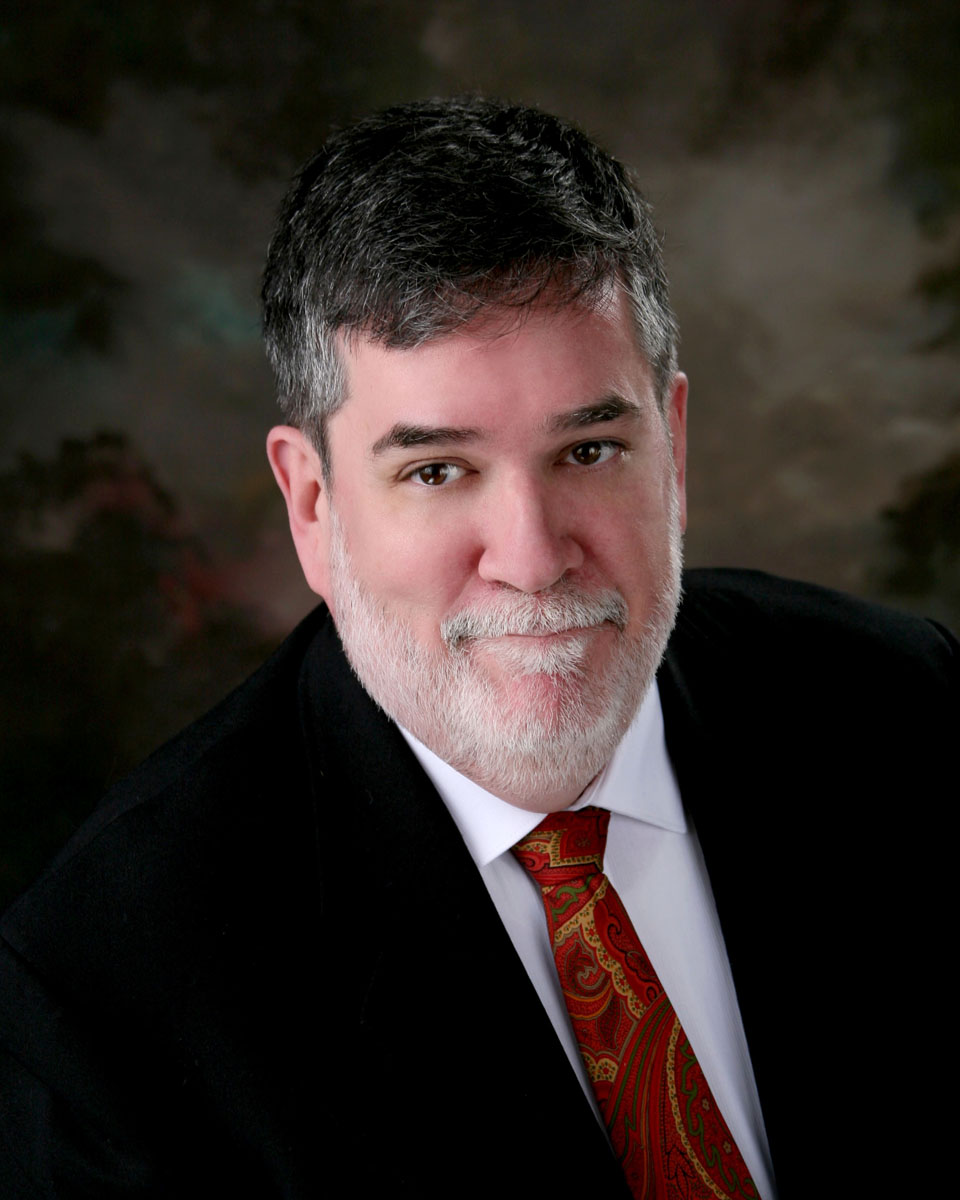
Rauel LaBreche founded VERITAS LLC right here in Prairie du Sac, after a long career teaching people how to use technology without being used by it.
He holds a Bachelor of Science in Psychology and Theatre, as well as a Master of Fine Arts in Stage Direction, studying how people's perspectives, biases and personalities shape their character and their "read" on information.
VERITAS builds tools that check claims the same way no matter whose side they flatter, and shows its work so you never have to take its word for it. The workshop is about the method, and the method is yours to keep.
Misinformation runs on a handful of old tricks. VERITAS calls them Core States. You'll learn to spot these five on sight.
The Outrage FarmerMaximizes moral outrage to drive engagement.
The GaslighterSystematically denies verified events.
The SirenEmotional manipulation disguised as moral clarity.
The ScarecrowInflates threats to trigger survival thinking.
The FirehoseOverwhelms you with a flood of false claims.
These Core States (five of the 23 that VERITAS tracks) are only the start. Learn how these Core States of influence work in our media, and how they shape our view of what's true and what isn't.